How the inner light is built
-

Gold, silver, and genuine opal
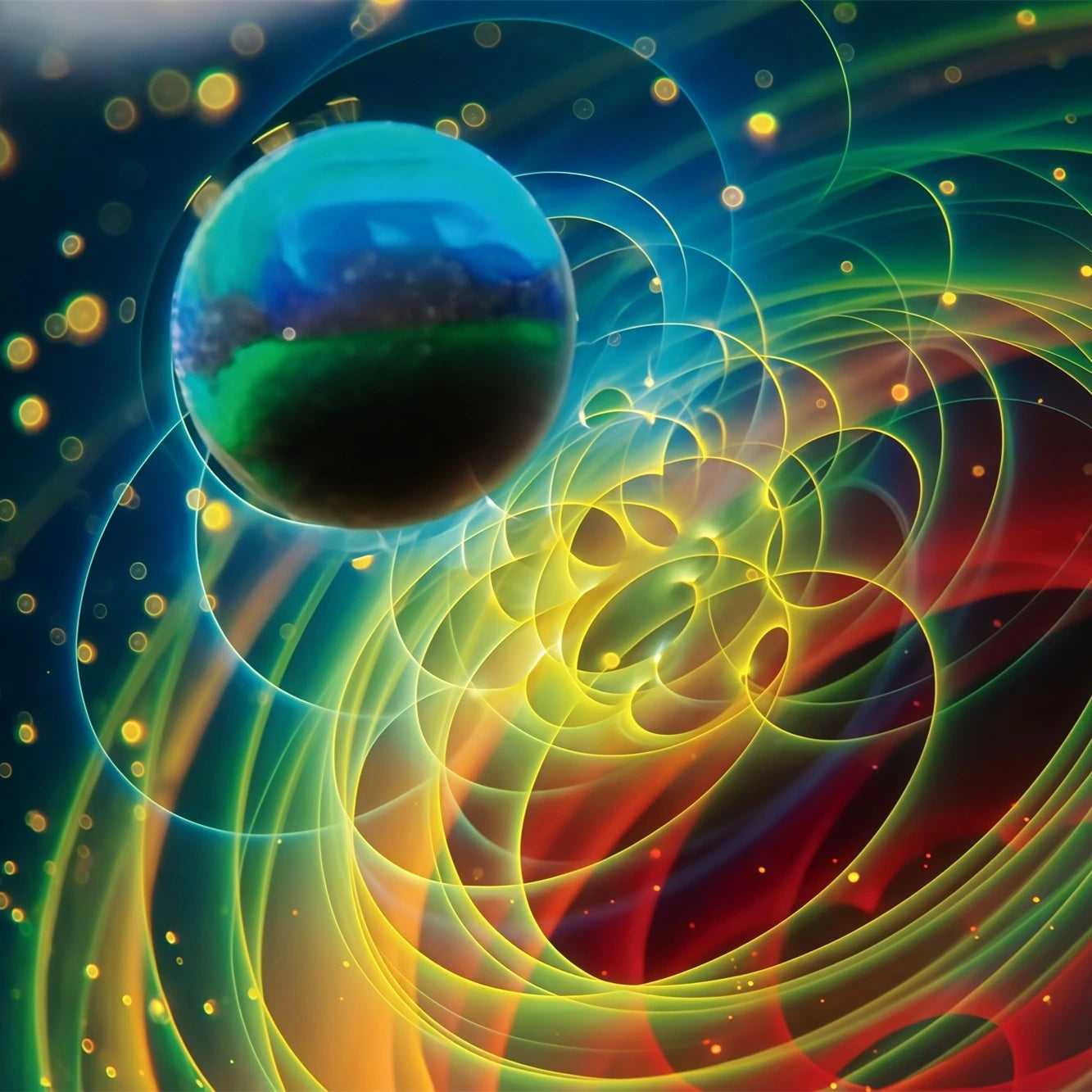
Gold and silver give the orb its color, movement, and depth. In the flame, metal vapor settles onto the glass through fuming, building the layered, nebula-like texture inside. A genuine opal at the center adds the final point of light that makes the whole piece feel alive.
-

Borosilicate glass in the flame
We use borosilicate glass for its durability, clarity, and stability under heat, then shape it by hand in a high-temperature propane-and-oxygen flame. At around 2000°C, the glass is repeatedly heated, turned, and refined as the form slowly takes shape.
-

Fuming in motion
As gold and silver settle onto the glass in the flame, the inner structure begins to build in layers. Because the balance of oxygen and fuel is always shifting, each piece develops its own movement, depth, and pattern — and no two can ever be fully repeated.
-

The form takes shape by hand
While the glass is still hot, the orb is guided and refined step by step. Small shifts in heat, angle, and timing all shape its final balance, depth, and form.


What happens after the flame
-

Annealed into balance
After shaping in the flame, the piece is placed in an electric kiln for annealing. This relieves internal stress in the glass while allowing the color and inner light to settle, open up, and come into balance over time.
-

Not every piece is released
Each orb is reviewed after annealing. Only pieces with the right balance, depth, structure, and overall feel are released. Anything that falls short is not released to customers.
-

Color keeps unfolding
The final look is not fixed the moment the flame is turned off. During annealing, the inner color continues to settle and open up, revealing richer layers, smoother transitions, and a fuller sense of depth.


Built for precision
-

An environment made for control
Every orb is made in a dedicated flame-working environment designed around heat stability, ventilation, timing, and control. That controlled setting is part of the craft itself — helping the process stay precise while allowing each piece to develop its own one-of-a-kind character.
-

Control in the flame
The flame is adjusted in real time through changes in oxygen and fuel. Even small shifts in that balance affect the heat, surface reaction, and the way color develops inside the glass.
-

Glass prepared for precision
Before color, heat, and structure come together, the glass itself must be clean, stable, and ready to respond consistently in the flame. That preparation helps give the final piece its clarity, control, and inner light.
-

Color is built in layers
Color is built step by step, not added all at once. That slower build creates cleaner transitions, deeper layers, and a more unified sense of depth inside the orb.


Shown with a Phone Camera and a Single Light Source


CosmoWhirl Orb — A Tiny Universe Made by Flame
CosmoWhirl Orb — A Tiny Universe Made by Flame
Couldn't load pickup availability